
Ingredient guide
What to know about tallow skincare
This page contains affiliate links. As an Amazon Associate I earn from qualifying purchases.
Tallow is having a moment, and most of the noise skips the part that matters: it is an occlusive, not an active. A tallow balm does not exfoliate, brighten or resurface. It sits on top of everything else and slows the water leaving your skin, which is exactly what a stripped, flaky, winter-worn barrier is short of — and exactly what an oily, congested face is not.
If dryness is the main reason you are here, start with the full dry skin routine and treat a balm as the final layer on top. dry skin routine.
The Ritual Lab reads the bottles on your shelf, moves what belongs in the morning, drops what clashes at night, and names at most one gap. The Quiz is if you are starting from zero. The Ritual Lab is if the bottles are already there. Open The Ritual Lab
A Lumen Ritual workspace · built with Grok
Written by Maria Alejandra, founder and editor · Last updated:
Independently researched and reviewed for accuracy. Read our editorial policy or how we research routines.
Disclaimer: Content on Lumen Ritual is for educational and cosmetic purposes only. Our routine builders are not replacements for professional medical diagnoses or dermatologist-prescribed treatment plans. Read the full policy
The short answer
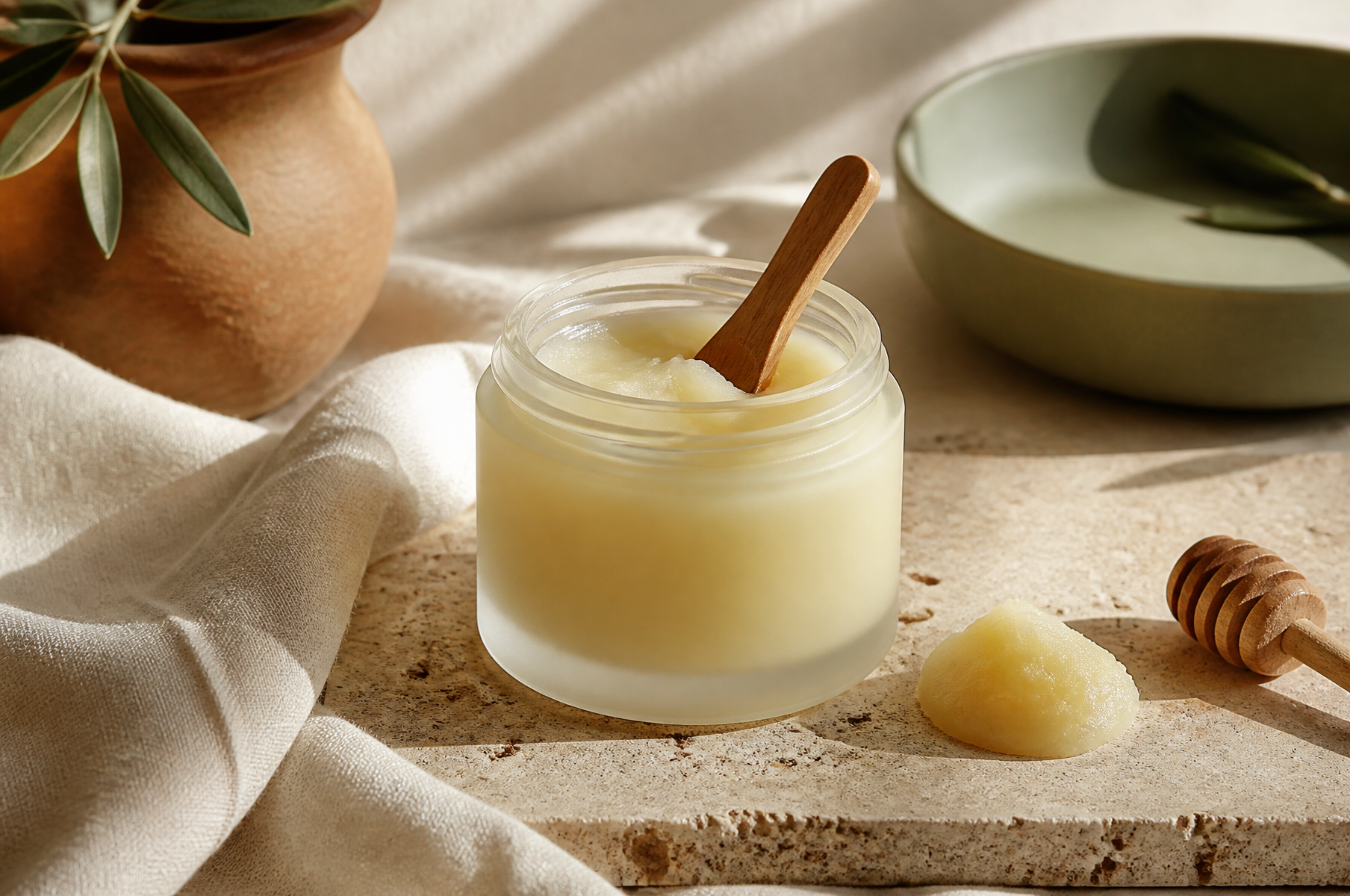
Tallow is rendered beef fat whipped into a balm. Its fatty acids sit close to the lipids already in skin, so it behaves as a rich final layer that slows water loss. It suits very dry or wind-exposed skin, and is usually a poor fit for oily, congestion-prone skin.
What tallow actually does on skin
Three plain facts explain both the enthusiasm and the caution around it:
It is a lipid-rich occlusive
Rendered tallow is mostly oleic, palmitic and stearic acids — the same families found in the skin's own surface lipids — so it spreads well and stays put as a final layer.
It slows water loss, it does not add water
Occlusives work on top of hydration. Applied to bone-dry skin, tallow seals in dryness. Applied over a damp face or a humectant serum, it holds that water in place.
It is rich, and richness is not universal
The same heaviness that rescues cracked hands can feel greasy and pore-clogging on an oily T-zone. Formula and skin type decide whether it helps.
Signs a tallow balm might suit your skin
- Skin still feels tight an hour after moisturizer
- Flaking around the nose, cheeks or shins through cold months
- A barrier worn down by strong actives, wind or hard water
- Lightweight gel creams disappear within minutes and leave nothing behind
Morning ritual
AM routine for tallow skincare
Mornings rarely need tallow. If you use it before sunscreen, use very little — a heavy layer can move a sunscreen film around and leave a shine you did not ask for.
- 1
Step 1: Cleanse gently
Water or a low-foam cleanser. Tallow users usually have dry skin, and morning stripping undoes the work.
- 2
Step 2: Hydrate first
A humectant layer — glycerin, hyaluronic acid or a simple hydrating toner — on damp skin. This is the water the balm will hold.
- 3
Step 3: Moisturize
Your usual cream. Tallow is an addition to a routine, not a replacement for one.
- 4
Step 4: Tallow, only where needed
A rice-grain amount warmed between fingertips, pressed onto dry patches only. Skip the T-zone.
- 5
Step 5: SPF 30 or higher
Sunscreen still goes last. Let the balm settle for a minute so the SPF layer stays even.
Evening ritual
PM routine for tallow skincare
Evening is where tallow earns its place: the last step, over everything else, on skin that is already hydrated.
- 1
Step 1: Cleanse
Remove sunscreen and the day. A cream or oil cleanser suits dry skin better than a foaming one.
- 2
Step 2: Actives, if you use them
Retinoid or acid on its scheduled nights, on dry skin, before anything rich goes on top.
- 3
Step 3: Hydrate
A humectant serum or essence while skin is still slightly damp.
- 4
Step 4: Moisturize
A ceramide cream to rebuild barrier lipids.
- 5
Step 5: Seal with tallow
A thin final layer, pressed rather than rubbed. Two or three nights a week is enough for most people.
What to look for on a tallow label
Grass-fed rendered tallow
The base itself. A short ingredient list — tallow, maybe one carrier oil — is easier to judge than a twenty-line blend.
Why I suggest itDermatology guidance for dry skin points to rich ointment- and cream-style moisturizers applied after washing, which is the role a tallow balm plays here.American Academy of Dermatology — dermatologists' tips for relieving dry skin
No added fragrance
Fragrance and essential oils are the most common trigger in balms. Unscented is the safer default for sensitive, reactive or pregnant users.
Optional squalane or jojoba
Lighter carriers thin the texture so the balm spreads without dragging.
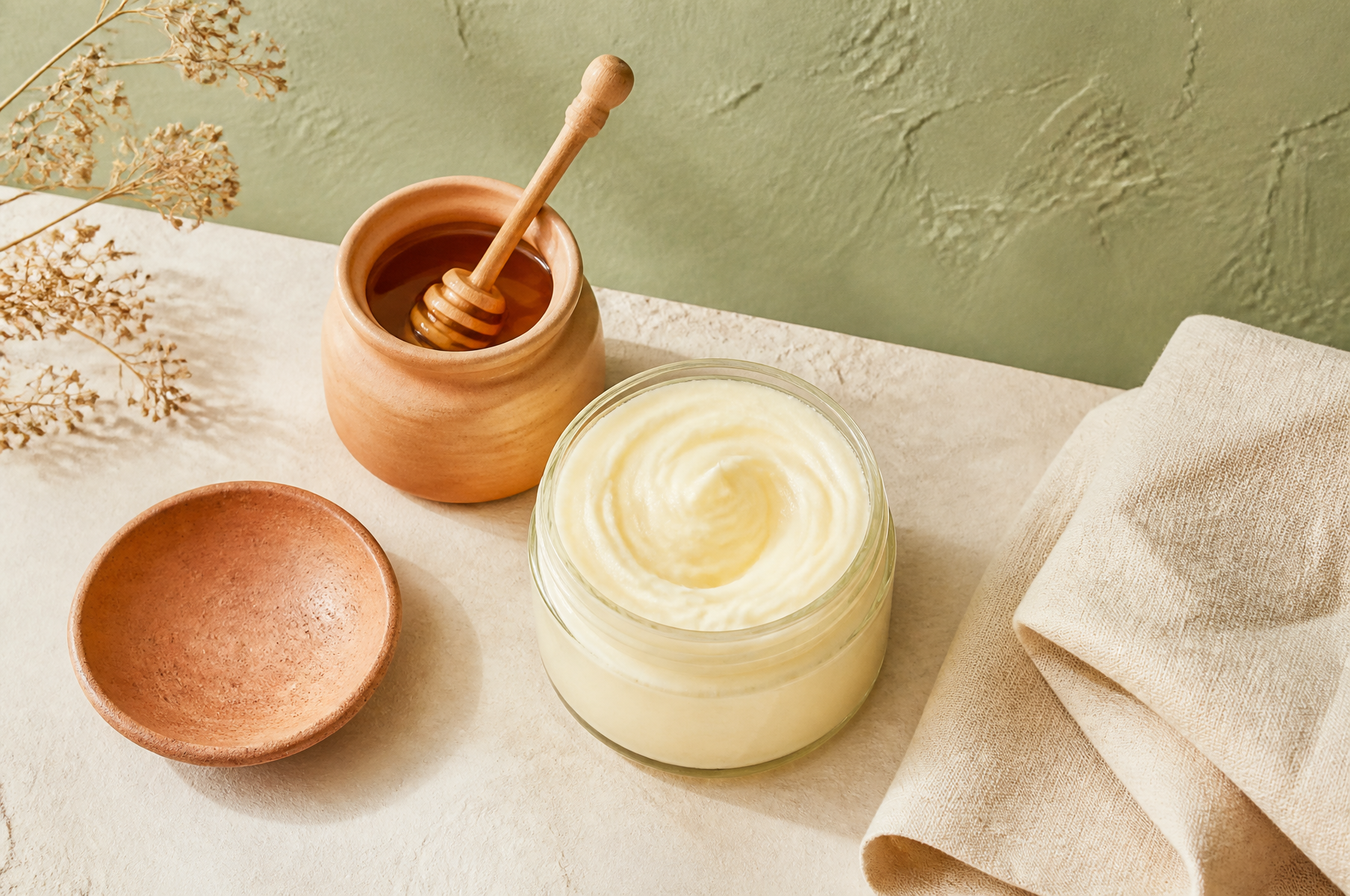
Beeswax or honey
Common in tallow blends. Both are worth checking against your own sensitivities before a full-face application.
Nothing that replaces sunscreen
No balm offers UV protection. Tallow sits alongside daily SPF, never instead of it.
Common mistakes with tallow
- Using it as a first step on dry skin, which seals dryness in rather than water
- Applying it all over an oily or congestion-prone face instead of on dry patches
- Swapping out an entire routine for one balm and dropping sunscreen with it
- Starting a scented balm on an already reactive barrier
- Using too much — a balm layer should look matte within minutes, not wet
Tallow skincare questions, answered
- What is tallow skincare?
- It is the use of rendered beef fat, usually whipped into a balm, as a rich moisturizing layer. Its fatty-acid profile is close to the lipids in the skin's surface, which is why it spreads well and lingers.
- Is tallow comedogenic?
- It can be. Tallow is high in oleic acid, which many oily and congestion-prone people find pore-clogging. If that is your skin, keep it to dry patches, or skip it and use a ceramide cream instead.
- Where does tallow go in a routine?
- Last. Cleanse, hydrate, moisturize, then press a thin tallow layer on top. In the morning it goes before sunscreen and only where skin is dry.
- Is tallow safe during pregnancy?
- An unscented, single-ingredient balm is a simple option that avoids the actives usually paused in pregnancy. Scented balms and essential-oil blends are the ones to leave on the shelf, and your clinician has the final word.
- Does tallow replace moisturizer?
- Not really. It holds water in but does not supply it, so it works best over a humectant and a cream rather than by itself.
- How often should I use a tallow balm?
- Two or three nights a week suits most people, nightly for very dry or wind-exposed skin. If you wake up looking greasy or congested, reduce the amount before you reduce the frequency.
Keep reading
Acne routine
Breakouts start inside the pore: excess oil, sticky dead skin cells, and C. acnes bacteria. A routine that helps keep breakouts under control keeps pores open with a consistent active, calms inflammation, and never strips the barrier — because irritated skin breaks out more.
Anti-aging routine
Roughly 80% of visible facial aging is caused by UV exposure, not time. That makes the routine simple in principle: protect during the day, stimulate collagen at night, and keep the barrier hydrated so lines look softer immediately.
Dullness routine
Dullness is usually light, not pigment. A build-up of dead cells scatters light instead of reflecting it, and dehydrated skin makes it worse. Smooth the surface, saturate it with water, and brighten tone — glow follows.
Glass skin routine
Glass skin is a surface condition, not a product. Layer water into damp skin, seal it with a barrier cream, exfoliate gently once or twice a week, and light reflects evenly instead of scattering.
Hyperpigmentation routine
Hyperpigmentation is excess melanin left behind after inflammation, hormones, or UV exposure. Fading it takes two things in parallel: an ingredient that slows new pigment production, and sunscreen that stops the spot being re-triggered every day. Everything else is optional.
Rosacea routine
Rosacea is a chronic inflammatory condition, not a hygiene problem. Skin that flushes easily has a weakened barrier and reactive blood vessels, so the routine that helps is short, fragrance-free, and consistent. Fewer, gentler steps almost always beat a longer regimen.
Men's skincare routine
Men's skin is measurably thicker, produces more sebum, and gets shaved several times a week. That combination means more shine, more ingrown hairs, and more razor irritation — but it also means a short, consistent routine works remarkably well. Four steps, twice a day, is enough.
Teen skincare routine
Teenage skin is going through a lot. Rising hormones send oil production into overdrive and pores clog more easily. A short, consistent routine with gentle cleansing and one pore-clearing active handles most of it.
Pregnancy-safe routine
Pregnancy brings breakouts, melasma, and new sensitivity just as retinoids come off the table. Azelaic acid, niacinamide, vitamin C, and tinted mineral SPF cover almost all of it safely.
Dark skin routine
Richly pigmented skin burns less but holds a mark far longer. Preventing inflammation matters more than any brightener: gentle actives, no scrubs, and a daily cast-free SPF stop dark marks and melasma before they start.
Fair skin routine
Fair skin has the least natural UV protection, so sun damage drives most visible aging. Protect hard by day, rebuild at night, and introduce actives slowly to avoid lasting redness.
Oily skin routine
Control shine and clear pores without stripping your barrier.
Dry skin routine
Rebuild a comfortable moisture barrier with layered hydration.
Combination skin routine
Balance an oily T-zone and drier cheeks with zone-aware layering.
Browse every skincare routine guide.
References and sources
Evidence reviewed: American Academy of Dermatology; Cosmetic Ingredient Review. Last read in full August 2026 by Maria Alejandra.
Ingredient behavior, tested concentrations, and safety guidance come from the sources below. Which specific product we suggest, the order we put steps in, and how gently we ramp a routine up are our own editorial judgement — useful, but not clinical evidence, and never a substitute for a dermatologist who can see your skin.
- 1.Dermatologists' tips for relieving dry skin — American Academy of Dermatology
- 2.Cosmetic ingredient safety reviews — Cosmetic Ingredient Review
- 3.Sunscreen FAQs — American Academy of Dermatology