
Barrier repair
La Roche-Posay Cicaplast Baume B5
This page contains affiliate links. As an Amazon Associate I earn from qualifying purchases.
Formulation analysis
A soothing multi-purpose balm built on 5% panthenol with madecassoside and zinc salts. It sits between a moisturizer and an ointment: rich enough to work as an overnight rescue layer, light enough to use as a daily cream on very dry skin.
Our verdict
Worth it if your skin is raw, red, or recovering: 5% panthenol with madecassoside and shea butter makes this the balm to reach for after over-exfoliation, a retinoid ramp-up, or winter windburn. Skip it as a daily face cream if you are acne-prone or want a matte morning finish — it is supportive, not corrective.
From research to routine
Where this fits in your routine
Answer three quiet questions and we will place this decision inside a full morning and evening routine for reactive, recovering skin — in order, with what to skip.
A Lumen Ritual tool • built with AI
Build my AM & PM routineThe Ritual Lab reads the bottles you already own and tells you what this one would replace, move, or clash with. The Quiz is if you are starting from zero. The Ritual Lab is if the bottles are already there.
A Lumen Ritual workspace · built with Grok
Open The Ritual LabWhat it does well
Calms visible redness and rebuilds comfort fast, on a fragrance-free formula with a disclosed 5% panthenol level. One small tube covers face, lips, cuticles and dry patches for months.
Where it falls short
The shea-heavy base is glossy and occlusive, so it reads greasy in the morning and does not suit everyone who is acne-prone. It contains no actives, so it will not treat anything.
- Key actives
- 5% panthenol, madecassoside, zinc gluconate
- Texture
- Thick balm, slightly glossy finish
- Fragrance
- Fragrance-free
- Best for
- Compromised, reactive, or flaking skin
- Size and price band
- 40 ml · Budget-friendly
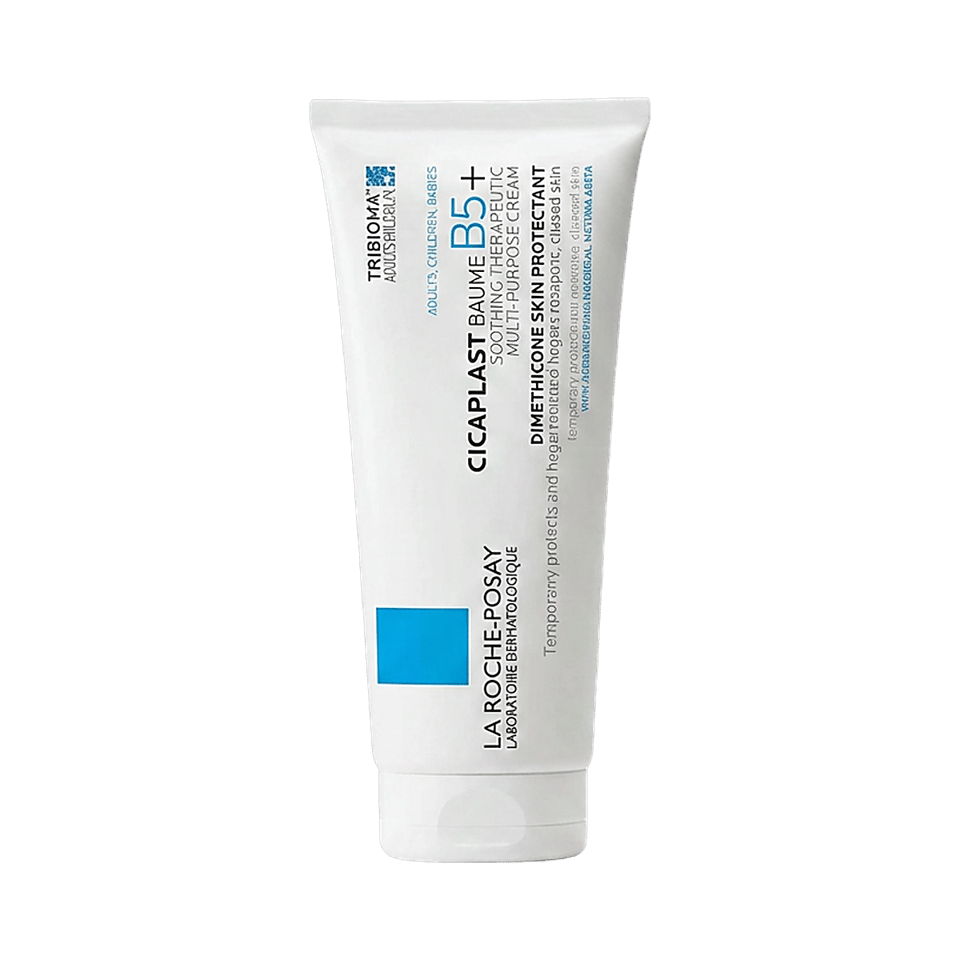
Why this one for you: Calms visible redness and rebuilds comfort fast, on a fragrance-free formula with a disclosed 5% panthenol level. One small tube covers face, lips, cuticles and dry patches for months.
Worth it if your skin is raw, red, or recovering: 5% panthenol with madecassoside and shea butter makes this the balm to reach for after over-exfoliation, a retinoid ramp-up, or winter windburn. Skip it as a daily face cream if you are acne-prone or want a matte morning finish — it is supportive, not corrective.
How we assessed this product
Maria Alejandra has not used this product herself, so there are no wear or results claims here. This is an independent formulation analysis: we read the full INCI list, check the disclosed active concentration and vehicle, and cross-check each active against peer-reviewed dermatology literature and the consensus positions of dermatology bodies. We note fragrance and common sensitizers, packaging suitability for light- or air-sensitive actives, and price per use. Claims the brand has not substantiated are reported as claims. Nothing here is sponsored or gifted, and no commission changes a verdict.
Key ingredients
- Panthenol 5%
- Provitamin B5 at a percentage the brand publishes. Humectant and anti-inflammatory; one of the better-evidenced soothing ingredients.
- Madecassoside
- A centella asiatica derivative used for redness and post-procedure recovery.
- Shea butter
- Occlusive emollient that gives the balm its cushion and slip.
- Zinc gluconate + manganese
- Included for their mild antibacterial and sebum-related properties, though the evidence here is thinner than for panthenol.
Texture and finish
Thick white balm with a faint clean scent (the formula is fragrance-free but the raw materials are not odorless). Absorbs to a slightly glossy finish rather than a matte one.
| Skin type | How it feels | Verdict |
|---|---|---|
| Dry | Rich, cushioned, stays put | Excellent — use nightly as the last layer |
| Normal | Glossy, slightly heavy | Use as a targeted rescue, not a daily cream |
| Combination | Heavy on the T-zone | Cheeks and around the nose only |
| Oily | Greasy film that lingers | Skip as an all-over cream; spot use only |
| Sensitive / reactive | Immediately soothing, no sting | Best case — this is what it is built for |
| Acne-prone | Occlusive over active breakouts | Use on retinoid-dry patches, not the whole face |
It suits you if
- Your skin is red, raw, or reactive right now
- You are recovering from over-exfoliation or a retinoid ramp-up
- You want one product for face, lips, cuticles, and dry patches
- You are prone to windburn or cold-weather flaking
Skip it if
- You are acne-prone and break out from shea butter
- You want a matte finish under makeup
- You need actives — this is purely supportive
Pros
- High panthenol percentage that the brand actually discloses
- Very versatile; a small tube lasts months
- Fragrance-free and suitable for sensitive skin
- Widely available at pharmacy pricing
Cons
- Glossy finish some people dislike in the morning
- Shea butter is not universally well tolerated by acne-prone skin
- Tube can be difficult to squeeze in cold weather
What I'd buy instead
If this one is not the right fit, these are the products I would look at next, and the reason for each.
- CeraVe Moisturizing Cream
- For everyday dryness rather than repair, at a much lower cost per ounce.
- First Aid Beauty Ultra Repair Cream
- A richer colloidal-oatmeal option if you want more cushion for eczema-prone patches.
The complaints people actually make
These are the recurring criticisms in published customer reviews, with what the formula explains about each one.
- It broke me out.
- Shea butter and the occlusive base can trap sebum on skin that is already congested. Cicaplast is designed as a recovery balm for compromised skin, not a daily moisturizer for acne-prone faces — restrict it to the dry patches a retinoid creates.
- It leaves my face shiny.
- That gloss is the shea and glycerin sealing water in, and it is the mechanism, not a defect. Apply a thinner layer, or use it only at night when the finish does not matter.
- It says fragrance-free but I can smell something.
- The formula carries no added fragrance; the faint scent comes from the raw materials, mostly the shea butter. Raw-material odor is not a perfume allergen source in the way an added fragrance blend is.
- The tube is impossible to squeeze.
- The balm thickens in cold conditions. Warming the tube in your hands for a few seconds restores flow — this is a viscosity issue, not an underfilled tube.
- It did nothing for my acne.
- It is not an acne product. There is no salicylic acid, benzoyl peroxide, or retinoid in it. It supports the barrier so acne treatments are tolerable; it does not treat lesions.
How to use it
- 1As a repair layer: thin coat over moisturizer at night.
- 2As a spot balm: on flaking patches around the nose and mouth.
- 3During a barrier reset: twice daily as your only moisturizer.
Where it fits in a routine
Last step at night during a barrier-repair phase, or over moisturizer on the areas a retinoid dries out most.
Frequently asked
- Can I use Cicaplast Baume B5 every day?
- Yes. During a barrier reset it can be your only moisturizer, twice daily. Once your skin is comfortable again, most people drop back to using it at night or on specific dry areas.
- Is Cicaplast Baume B5 good for acne-prone skin?
- As a targeted balm, yes; as an all-over daily cream, often not. The shea-rich base is occlusive. Use it on the flaking patches a retinoid creates, and keep a lighter cream for the rest of the face.
- Can I use it with retinol or adapalene?
- Yes, and it is one of the better pairings. Apply the retinoid to dry skin, wait, then use the balm over it — or use the balm only on nights your skin feels tight.
- Is it safe during pregnancy?
- There are no retinoids or salicylates in it, so it is generally considered a safe soothing option. Confirm anything you apply regularly with your own doctor.
- What is the difference between Cicaplast Baume B5 and B5+?
- B5+ is the reformulated version with added tribioma prebiotic technology and a slightly lighter feel. The panthenol level and core purpose are the same, so either works as a recovery balm.
- Can I use it on my lips and hands?
- Yes — that versatility is a large part of why one tube lasts so long. It works on lips, cuticles, elbows and any chapped patch.
More breakdowns
Reader feedback
Was this review helpful?
References and sources
Evidence reviewed: American Academy of Dermatology; Cosmetic Ingredient Review. Last read in full August 2026 by Maria Alejandra.
Ingredient behavior, tested concentrations, and safety guidance come from the sources below. Which specific product we suggest, the order we put steps in, and how gently we ramp a routine up are our own editorial judgement — useful, but not clinical evidence, and never a substitute for a dermatologist who can see your skin.
- 1.Dry skin: diagnosis and treatment — American Academy of Dermatology
- 2.Cosmetic ingredient safety assessments — Cosmetic Ingredient Review
- 3.Skin care tips dermatologists use — American Academy of Dermatology
This breakdown is based on publicly available ingredient lists and manufacturer information.