
Moisturizer
CeraVe Moisturizing Cream
This page contains affiliate links. As an Amazon Associate I earn from qualifying purchases.
Used personally
A thick, fragrance-free occlusive cream built around three skin-identical ceramides and hyaluronic acid in a slow-release MVE delivery system. It is the reference point most barrier creams are compared against, largely because the formula is simple, the tub is large, and the price per ounce is low.
Our verdict
If your skin is dry, tight, flaking, or recovering from a retinoid or over-exfoliation, this is the cream to buy — three skin-identical ceramides, cholesterol and petrolatum, fragrance-free, at one of the lowest costs per ounce on the shelf. If your skin is oily or acne-prone, or you want something that disappears under makeup, it is too heavy and you should look at a gel-cream instead.
From research to routine
Where this fits in your routine
Answer three quiet questions and we will place this decision inside a full morning and evening routine for dry skin — in order, with what to skip.
A Lumen Ritual tool • built with AI
Build my AM & PM routineThe Ritual Lab reads the bottles you already own and tells you what this one would replace, move, or clash with. The Quiz is if you are starting from zero. The Ritual Lab is if the bottles are already there.
A Lumen Ritual workspace · built with Grok
Open The Ritual LabWhat it does well
Rebuilds a compromised barrier cheaply, buffers retinoids, and works face-to-body from one tub.
Where it falls short
Heavy on oily skin, slow to sink in, tub packaging, and it treats nothing on its own.
- Best for
- Dry, tight, flaking or barrier-damaged skin
- Texture
- Thick occlusive cream, satin finish
- Fragrance
- None, and no essential oils
- Actives
- None — ceramides NP/AP/EOP, HA, cholesterol, petrolatum
- Size and price band
- 16–19 oz tub · Budget-friendly
- Use it
- AM and PM, last step (before SPF in the morning)
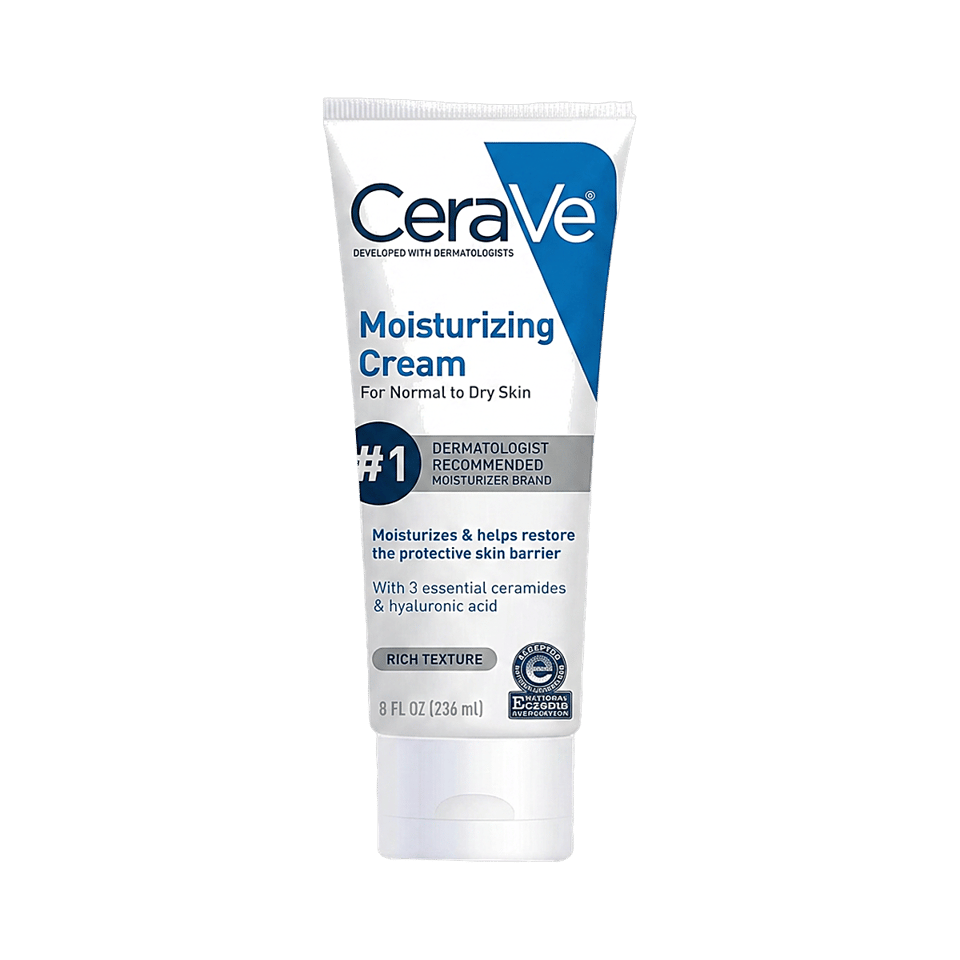
Why this one for you: Rebuilds a compromised barrier cheaply, buffers retinoids, and works face-to-body from one tub.
If your skin is dry, tight, flaking, or recovering from a retinoid or over-exfoliation, this is the cream to buy — three skin-identical ceramides, cholesterol and petrolatum, fragrance-free, at one of the lowest costs per ounce on the shelf. If your skin is oily or acne-prone, or you want something that disappears under makeup, it is too heavy and you should look at a gel-cream instead.
How we assessed this product
Maria Alejandra has used this product herself, and the texture and wear notes below come from that use. Everything about ingredients and evidence is checked separately: we read the full INCI list, check the disclosed active concentration and vehicle, and cross-check each active against peer-reviewed dermatology literature and the consensus positions of dermatology bodies. We note fragrance and common sensitizers, packaging suitability for light- or air-sensitive actives, and price per use. Claims the brand has not substantiated are reported as claims. Nothing here is sponsored or gifted, and no commission changes a verdict.
What I tested
In and out of rotation for several years, mostly as a winter night cream.
- Texture
- Dense and slightly waxy in the tub; it warms into a softer cream between the fingers.
- Application
- Needs a pea-sized amount worked in palms first. Applied straight from the tub to dry skin it drags.
- Finish
- Satin, faintly dewy, with a film you can still feel an hour later.
- Pilling
- Pills if layered over a silicone primer or a still-wet serum. Fine once serums dry.
- Fragrance
- None detectable.
- Irritation
- No stinging on my skin, including on cracked patches around the nose in winter.
- Layering
- Best as the last night step. Under sunscreen in the morning it feels like too much.
- Packaging
- A wide tub, so fingers go in the product; the pump version is the more hygienic buy.
Key ingredients
- Ceramides NP, AP, EOP
- The three lipid types most depleted in dry and over-exfoliated skin. Percentages are not published, but they appear high enough in the list to be functional rather than decorative.
- Hyaluronic acid
- Humectant that draws water into the upper layers; works best applied to slightly damp skin and sealed by the cream's occlusive base.
- Cholesterol and phytosphingosine
- Supporting lipids that make the ceramide content more physiologically complete.
- Petrolatum
- Listed high in the formula — the reason it seals so effectively and also the reason it feels heavy.
Texture and finish
Thick and slightly waxy out of the tub, spreading into a satin, non-tacky film. It takes a minute to absorb and leaves a noticeable barrier layer, which is the intent.
Is CeraVe Moisturizing Cream good for your skin type?
CeraVe Moisturizing Cream is best for dry, sensitive or barrier-damaged skin: its three ceramides, hyaluronic acid and petrolatum rebuild the barrier without fragrance or actives. It is fine at night for normal and combination skin, but too heavy for oily or actively acne-prone skin, which does better with a ceramide gel-cream.
| Skin type | How it feels | Verdict |
|---|---|---|
| Dry | Cushioned, slightly dewy | Best case — use it morning and night |
| Normal | Satin, no shine | Works well at night; may be much in summer |
| Combination | Rich on the T-zone | Use on cheeks only, or PM only |
| Oily | Heavy, stays on the surface | Skip — choose a gel-cream instead |
| Sensitive / reactive | Calm, no sting | Strong pick — no fragrance, no actives |
| Acne-prone | Occlusive film | Only on dry patches or as a retinoid buffer |
It suits you if
- Your skin is dry, tight, or flaking, especially in winter
- You are rebuilding a barrier after over-exfoliating
- You need a body cream and a face cream in one tub
- You react to fragrance or essential oils
Skip it if
- Your skin is oily or you break out from heavy occlusives
- You want something lightweight under makeup
- You dislike petrolatum-based textures
Pros
- Fragrance-free and free of essential oils
- Complete ceramide-plus-cholesterol lipid profile
- Very low cost per ounce; widely stocked
- Non-comedogenic labelling and a long history of dermatologist recommendation
Cons
- Too heavy for oily skin and hot climates
- Tub packaging means fingers in the product
- Contains no actives — it repairs and protects, it does not treat

What I'd buy instead
If this one is not the right fit, these are the products I would look at next, and the reason for each.
- La Roche-Posay Cicaplast Baume B5
- When skin is actively raw or over-exfoliated rather than simply dry — it is the more repairing of the two, in a tube instead of a tub.
- Neutrogena Hydro Boost Water Gel
- If the ceramide cream feels heavy or you need something that disappears under sunscreen and makeup.
- Vanicream Moisturizing Cream
- A comparable fragrance-free option with an even shorter ingredient list, for people reacting to something unidentified.
The complaints people actually make
These are the recurring criticisms in published customer reviews, with what the formula explains about each one.
- "It broke me out."
- Petrolatum sits high in the formula, so it traps whatever is under it. On oily or congested skin that film keeps sebum and dead cells in place. It is the occlusive load, not a comedogenic active — a lighter ceramide gel-cream usually solves it.
- "It pills under sunscreen or makeup."
- The cream needs a full minute to set. Applied over a still-wet serum or rubbed rather than pressed in, the film rolls. Use less, press it in, then wait before SPF.
- "The tub is unhygienic."
- Fair. The formula is preserved, but fingers in a tub used for months is not ideal — use a small spatula, or buy the pump bottle version of the same formula.
- "It did nothing for my wrinkles or dark spots."
- Expected. There are no actives here — no retinoid, no vitamin C, no acids. It repairs and protects the barrier so treatments are tolerable; it is not itself a treatment.
- "The formula changed / it feels different."
- CeraVe has revised the ingredient list over the years (including fragrance-free relabelling and preservative updates). Check the list on the tub you receive rather than an older review.
How to use it
- 1Apply to slightly damp skin after cleansing and any serums.
- 2Use a pea-to-almond amount for the face; more for the body.
- 3As a retinoid buffer, apply a thin layer before and after the retinoid.
Where it fits in a routine
Final step at night for dry or compromised skin, or as the moisturizer layer under sunscreen in cold weather.
Frequently asked
- Is CeraVe Moisturizing Cream good for the face?
- Yes, for dry, sensitive or barrier-damaged faces. It is fragrance-free, non-comedogenic labeled, and built on ceramides. On oily or acne-prone skin it is usually too occlusive for daily all-over facial use.
- What is the difference between CeraVe Moisturizing Cream and the Daily Moisturizing Lotion?
- Same ceramide-and-hyaluronic-acid concept, different weight. The cream is a thick tub with petrolatum for dry skin and winter; the lotion is a thinner pump for normal to slightly dry skin and warmer weather.
- Can you use CeraVe Moisturizing Cream with retinol or tretinoin?
- Yes — it is one of the standard retinoid buffers. Apply a thin layer, wait, apply the retinoid, then seal with more cream. It reduces peeling without meaningfully blocking the retinoid.
- Does CeraVe Moisturizing Cream clog pores?
- It is labeled non-comedogenic, but the petrolatum base is occlusive. On oily or congested skin it can trap sebum and lead to breakouts, which is why we only recommend it there as a spot treatment for dry patches.
- Can you use it in the morning under sunscreen?
- Yes on dry skin. Use a small amount, press it in, and give it a minute to set so your sunscreen does not pill.
- Does it expire once opened?
- Use within about 12 months of opening, and keep fingers clean — the tub has no airless pump to protect the product.
More breakdowns
Reader feedback
Was this review helpful?
References and sources
Evidence reviewed: American Academy of Dermatology; Cosmetic Ingredient Review. Last read in full August 2026 by Maria Alejandra.
Ingredient behavior, tested concentrations, and safety guidance come from the sources below. Which specific product we suggest, the order we put steps in, and how gently we ramp a routine up are our own editorial judgement — useful, but not clinical evidence, and never a substitute for a dermatologist who can see your skin.
- 1.Dry skin: diagnosis and treatment — American Academy of Dermatology
- 2.Cosmetic ingredient safety assessments — Cosmetic Ingredient Review
- 3.Skin care tips dermatologists use — American Academy of Dermatology
This breakdown is based on publicly available ingredient lists and manufacturer information.