Method guide
A realistic look at Korean skincare
This page contains affiliate links. As an Amazon Associate I earn from qualifying purchases.
The ten-step routine was a magazine framing, not a rule anyone in Seoul follows every night. What actually defines K-beauty is the order of operations: thin to thick, water before oil, gentleness over strength, and sunscreen treated as non-negotiable. Once you see it that way, you can borrow the parts you want without buying a shelf of products.
For the hydration-layering version of this method in detail, see the glass skin routine. glass skin routine.
The Ritual Lab reads the bottles on your shelf, moves what belongs in the morning, drops what clashes at night, and names at most one gap. The Quiz is if you are starting from zero. The Ritual Lab is if the bottles are already there. Open The Ritual Lab
A Lumen Ritual workspace · built with Grok
Written by Maria Alejandra, founder and editor · Last updated:
Independently researched and reviewed for accuracy. Read our editorial policy or how we research routines.
Disclaimer: Content on Lumen Ritual is for educational and cosmetic purposes only. Our routine builders are not replacements for professional medical diagnoses or dermatologist-prescribed treatment plans. Read the full policy
The short answer
Korean skincare is a method, not a step count: cleanse gently, layer thin hydration, use one soothing or brightening active, and protect with sunscreen every morning. Four or five products cover it. Essences, ampoules and sleeping masks are textures, not extra obligations.
The four jobs behind every K-beauty routine
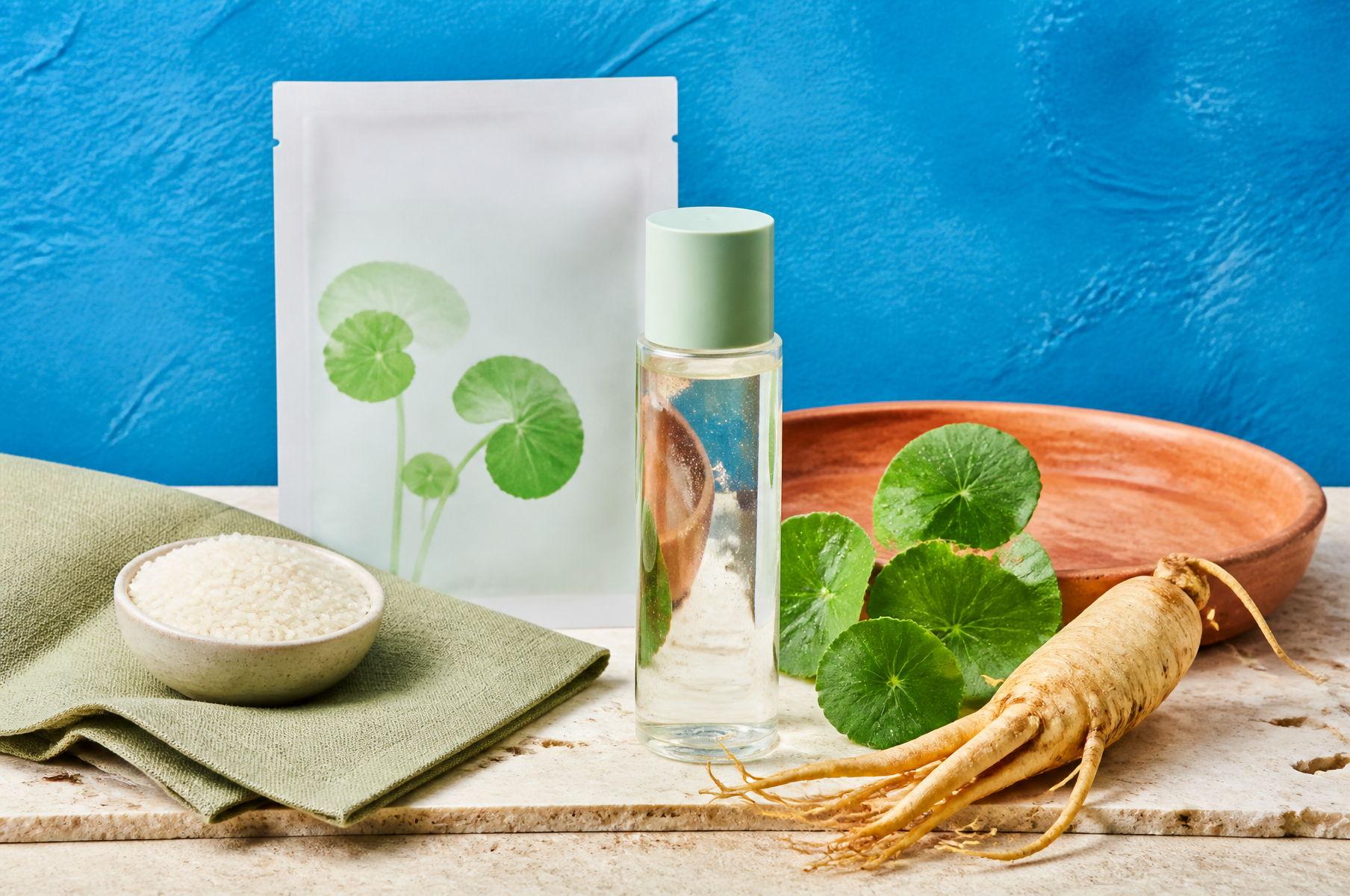
Every step in a Korean routine is doing one of four things. Anything that is not is optional:
Clean without stripping
An oil or balm cleanser dissolves sunscreen and sebum, a low-pH water cleanser finishes the job. Skin should feel soft afterwards, never squeaky.
Layer water in thin passes
Toner, essence and serum are all mostly water. Two or three thin layers pressed into damp skin hold more hydration than one thick one.
Soothe rather than attack
Centella, panthenol, mugwort and niacinamide do the work that harsher actives do elsewhere, with far less barrier fallout.
Protect every morning
Daily broad-spectrum sunscreen is the step that makes the rest of the routine visible over months.
Signs the K-beauty approach suits you
- Strong actives leave your skin red, tight or peeling
- Your skin is oily on the surface but still feels dehydrated
- You want texture and tone to improve gradually rather than aggressively
- You like a routine you can shorten on tired nights without losing the thread

Morning ritual
AM routine for korean skincare
Mornings are short: rinse, hydrate, protect. Everything stays lightweight so nothing pills under sunscreen.
- 1
Step 1: Rinse or cleanse lightly
Water alone, or a gentle low-pH cleanser if you wake up oily.
- 2
Step 2: Toner or first essence
Press a watery layer into damp skin with your palms. Skip the astringent, alcohol-forward kind.
- 3
Step 3: Serum or ampoule
One target for the morning — niacinamide for tone, hyaluronic acid for hydration, vitamin C if your skin tolerates it.
- 4
Step 4: Light moisturizer or emulsion
A gel-cream or emulsion to hold the layers in place without weight.
- 5
Step 5: Sunscreen
Broad-spectrum SPF 30 or higher, applied generously. Korean sunscreen textures make this step easy to keep.
Evening ritual
PM routine for korean skincare
Evenings do the cleaning and the repair. Two cleanses, hydration layers, one treatment, then something to seal it.
- 1
Step 1: Oil or balm cleanse
Massage over dry skin to melt sunscreen and makeup, then emulsify with water.
- 2
Step 2: Low-pH water cleanser
A gentle gel or cream cleanser to finish. This is the whole double cleanse — nothing more elaborate.
- 3
Step 3: Essence and serum
Two thin layers on damp skin. A snail mucin or centella essence is the classic soothing choice here.
- 4
Step 4: Treatment, on its nights
Retinal, an acid, or a sheet mask — one of them, not all three. Two or three nights a week is plenty.
- 5
Step 5: Cream or sleeping mask
A ceramide cream most nights, a sleeping mask when skin needs a heavier seal.
K-beauty textures and ingredients, decoded
Toner and first essence
Watery layers applied straight after cleansing to rehydrate the surface before anything richer goes on.
Essence, serum, ampoule
The same idea at rising concentrations: essence is the lightest, ampoule the most concentrated. You need one, not all three.
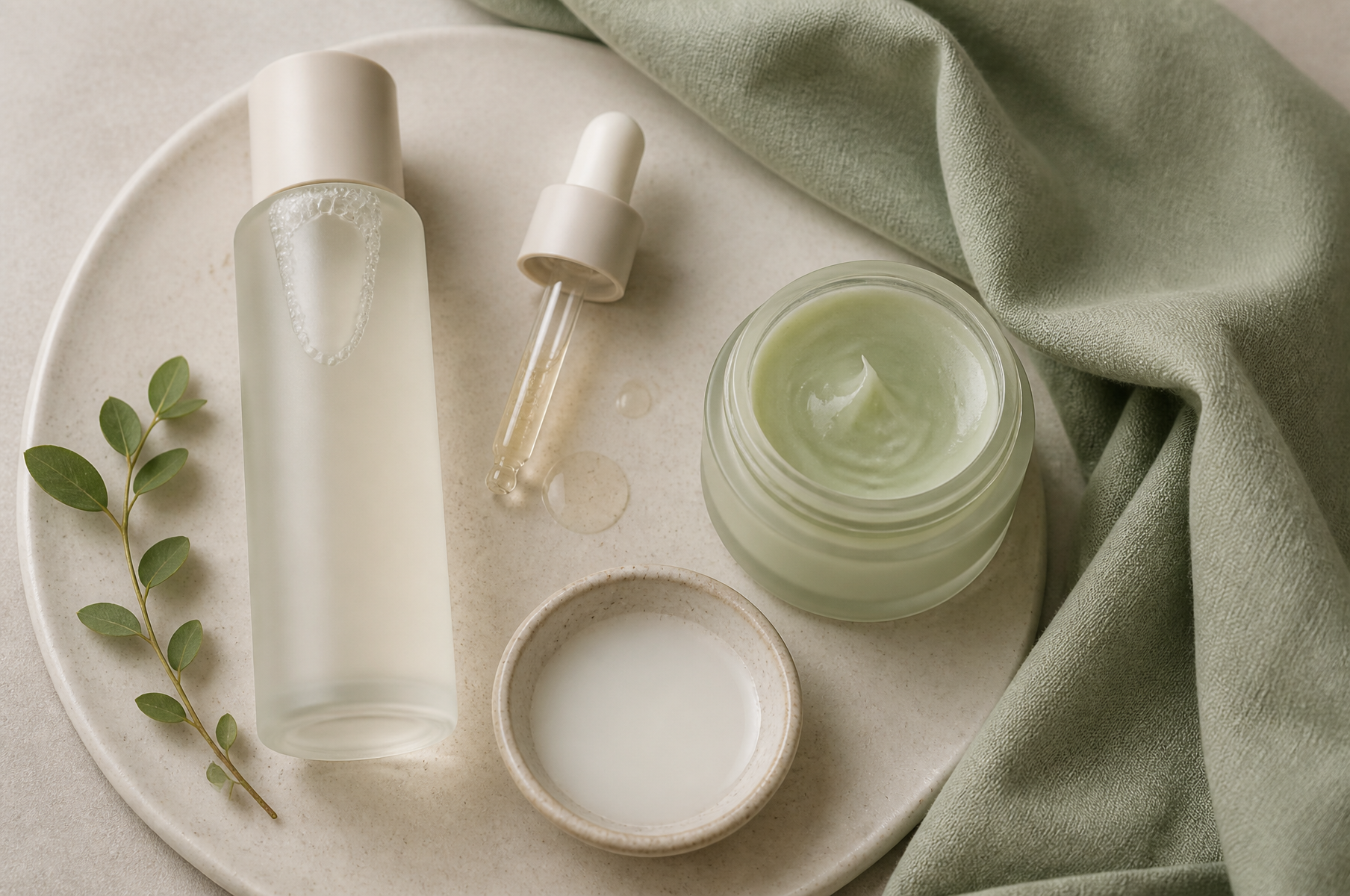
Centella asiatica (cica)
The signature soothing ingredient in Korean formulas, used for redness and comfort after actives or sun exposure.
Snail mucin
A humectant-rich filtrate that leaves skin plump and smooth; a favourite layer for skin recovering from strong actives.
Niacinamide
Widely studied for uneven tone, oil balance and barrier support, and gentle enough for daily use in most formulas.
Why I suggest itUneven tone responds to consistent topical care plus daily sun protection, which is why niacinamide sits alongside sunscreen rather than replacing it.American Academy of Dermatology — how to fade dark spots
Sunscreen
The step that protects everything else. Reapply through long days outdoors.
Why I suggest itBroad-spectrum daily sunscreen is the baseline recommendation behind any tone or texture goal.American Academy of Dermatology — sunscreen FAQs
Where K-beauty routines go wrong
- Buying ten products because of a step count that was never a rule
- Sheet masking nightly, which leaves skin soggy and reactive rather than glowing
- Layering an essence, an ampoule and a serum that all do the same job
- Adding strong exfoliating acids on top of a routine built for gentleness
- Treating sunscreen as the optional step and the sleeping mask as the essential one
Korean skincare questions, answered
- Is the 10-step Korean routine real?
- It was a marketing framing. Most people in Korea use four to six products daily and add masks or extra layers occasionally. The order matters far more than the number.
- What is the difference between an essence, a serum and an ampoule?
- Concentration and texture. An essence is watery and hydrating, a serum is more targeted, an ampoule is the most concentrated. Pick one for your main concern rather than stacking all three.
- Do I need to double cleanse every day?
- At night, if you wear sunscreen or makeup — which is most days. In the morning a single gentle cleanse or plain water is enough.
- Can I mix K-beauty products with what I already use?
- Yes. Keep the thin-to-thick order, add one new product at a time, and give each two weeks before judging it.
- Is Korean skincare good for acne-prone skin?
- The gentle, hydration-led structure sits well alongside an acne active, since it supports the barrier while the active does its job. Keep textures light and non-comedogenic.
- What is a sleeping mask?
- A richer leave-on cream used at the end of the evening routine, usually one to three nights a week, to seal in the layers underneath while you sleep.
Keep reading
Acne routine
Breakouts start inside the pore: excess oil, sticky dead skin cells, and C. acnes bacteria. A routine that helps keep breakouts under control keeps pores open with a consistent active, calms inflammation, and never strips the barrier — because irritated skin breaks out more.
Anti-aging routine
Roughly 80% of visible facial aging is caused by UV exposure, not time. That makes the routine simple in principle: protect during the day, stimulate collagen at night, and keep the barrier hydrated so lines look softer immediately.
Dullness routine
Dullness is usually light, not pigment. A build-up of dead cells scatters light instead of reflecting it, and dehydrated skin makes it worse. Smooth the surface, saturate it with water, and brighten tone — glow follows.
Glass skin routine
Glass skin is a surface condition, not a product. Layer water into damp skin, seal it with a barrier cream, exfoliate gently once or twice a week, and light reflects evenly instead of scattering.
Hyperpigmentation routine
Hyperpigmentation is excess melanin left behind after inflammation, hormones, or UV exposure. Fading it takes two things in parallel: an ingredient that slows new pigment production, and sunscreen that stops the spot being re-triggered every day. Everything else is optional.
Rosacea routine
Rosacea is a chronic inflammatory condition, not a hygiene problem. Skin that flushes easily has a weakened barrier and reactive blood vessels, so the routine that helps is short, fragrance-free, and consistent. Fewer, gentler steps almost always beat a longer regimen.
Men's skincare routine
Men's skin is measurably thicker, produces more sebum, and gets shaved several times a week. That combination means more shine, more ingrown hairs, and more razor irritation — but it also means a short, consistent routine works remarkably well. Four steps, twice a day, is enough.
Teen skincare routine
Teenage skin is going through a lot. Rising hormones send oil production into overdrive and pores clog more easily. A short, consistent routine with gentle cleansing and one pore-clearing active handles most of it.
Pregnancy-safe routine
Pregnancy brings breakouts, melasma, and new sensitivity just as retinoids come off the table. Azelaic acid, niacinamide, vitamin C, and tinted mineral SPF cover almost all of it safely.
Dark skin routine
Richly pigmented skin burns less but holds a mark far longer. Preventing inflammation matters more than any brightener: gentle actives, no scrubs, and a daily cast-free SPF stop dark marks and melasma before they start.
Fair skin routine
Fair skin has the least natural UV protection, so sun damage drives most visible aging. Protect hard by day, rebuild at night, and introduce actives slowly to avoid lasting redness.
Oily skin routine
Control shine and clear pores without stripping your barrier.
Dry skin routine
Rebuild a comfortable moisture barrier with layered hydration.
Combination skin routine
Balance an oily T-zone and drier cheeks with zone-aware layering.
Browse every skincare routine guide.
References and sources
Evidence reviewed: American Academy of Dermatology. Last read in full August 2026 by Maria Alejandra.
Ingredient behavior, tested concentrations, and safety guidance come from the sources below. Which specific product we suggest, the order we put steps in, and how gently we ramp a routine up are our own editorial judgement — useful, but not clinical evidence, and never a substitute for a dermatologist who can see your skin.
- 1.Sunscreen FAQs — American Academy of Dermatology
- 2.How to fade dark spots in darker skin tones — American Academy of Dermatology
- 3.Skin care tips dermatologists use — American Academy of Dermatology