
Retinoid
Differin Adapalene Gel 0.1%
This page contains affiliate links. As an Amazon Associate I earn from qualifying purchases.
Formulation analysis
The only prescription-strength retinoid available over the counter in the US. Adapalene is a third-generation retinoid with unusually selective receptor binding, which is why it is effective against comedonal and inflammatory acne while irritating less than tretinoin at comparable strength.
Our verdict
Worth it if you have blackheads, closed comedones, or persistent inflammatory acne and can commit to twelve weeks — this is prescription-strength retinoid efficacy at pharmacy pricing, and it stays stable next to benzoyl peroxide. Skip it if you are pregnant or breastfeeding, currently over-exfoliated, or dealing with nodular scarring acne that needs a dermatologist.
From research to routine
Where this fits in your routine
Answer three quiet questions and we will place this decision inside a full morning and evening routine for acne-prone skin — in order, with what to skip.
A Lumen Ritual tool • built with AI
Build my AM & PM routineThe Ritual Lab reads the bottles you already own and tells you what this one would replace, move, or clash with. The Quiz is if you are starting from zero. The Ritual Lab is if the bottles are already there.
A Lumen Ritual workspace · built with Grok
Open The Ritual LabWhat it does well
The only prescription-strength retinoid sold over the counter in the US, well studied for comedonal acne, stable alongside benzoyl peroxide, and cheap enough to stay on for a year.
Where it falls short
The purge in weeks two to four makes people quit, the gel is drying enough that a moisturizer is mandatory, and it does nothing quickly — twelve weeks is the honest evaluation point.
- Key active
- 0.1% adapalene (third-generation retinoid)
- Texture
- Clear aqueous gel, dries fast, not moisturizing
- Fragrance
- Fragrance-free, alcohol-free
- Best for
- Comedonal and inflammatory acne, prevention
- Timeline
- Purge weeks 2-4; results at 12 weeks
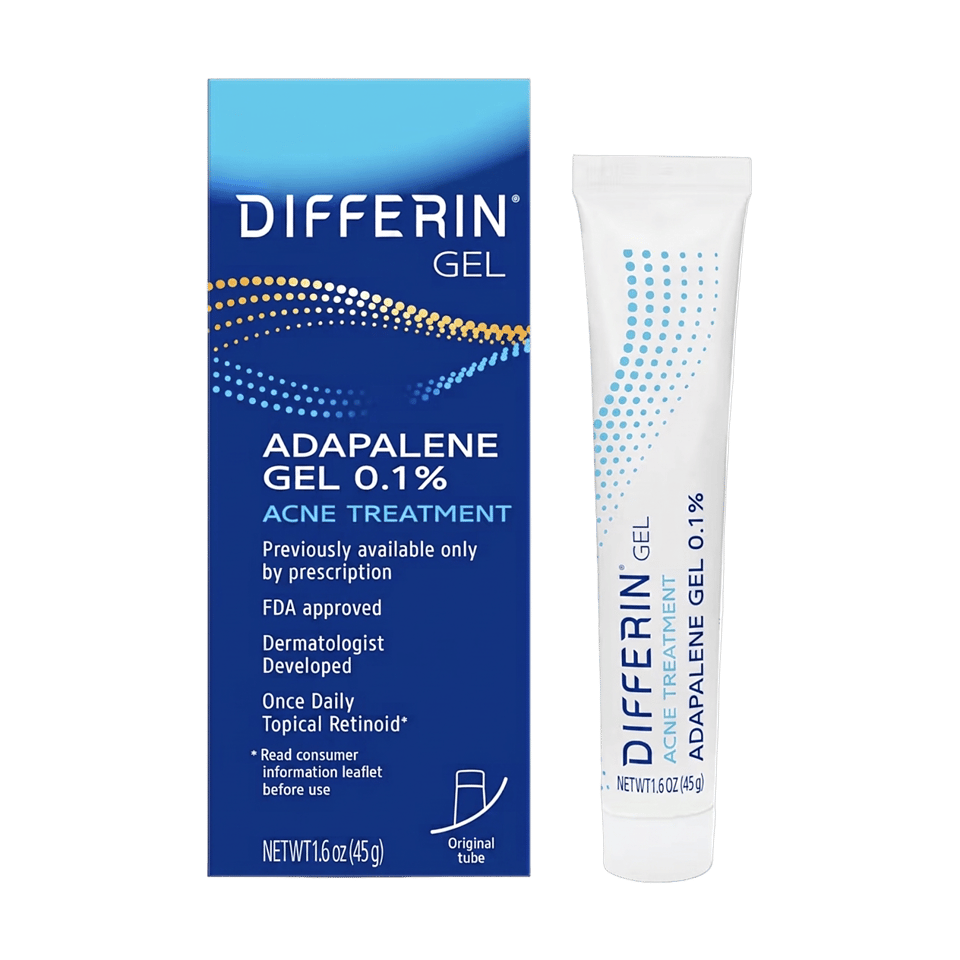
Why this one for you: The only prescription-strength retinoid sold over the counter in the US, well studied for comedonal acne, stable alongside benzoyl peroxide, and cheap enough to stay on for a year.
Worth it if you have blackheads, closed comedones, or persistent inflammatory acne and can commit to twelve weeks — this is prescription-strength retinoid efficacy at pharmacy pricing, and it stays stable next to benzoyl peroxide. Skip it if you are pregnant or breastfeeding, currently over-exfoliated, or dealing with nodular scarring acne that needs a dermatologist.
How we assessed this product
Maria Alejandra has not used this product herself, so there are no wear or results claims here. This is an independent formulation analysis: we read the full INCI list, check the disclosed active concentration and vehicle, and cross-check each active against peer-reviewed dermatology literature and the consensus positions of dermatology bodies. We note fragrance and common sensitizers, packaging suitability for light- or air-sensitive actives, and price per use. Claims the brand has not substantiated are reported as claims. Nothing here is sponsored or gifted, and no commission changes a verdict.
Key ingredients
- Adapalene 0.1%
- Binds selectively to retinoic acid receptors involved in follicular keratinization — the process that creates comedones in the first place. Stable in light and compatible with benzoyl peroxide, unlike tretinoin.
Texture and finish
A clear, alcohol-free aqueous gel. Dries quickly and can feel slightly tight; it is not moisturizing in any way and must be paired with a cream.
| Skin type | How it feels | Verdict |
|---|---|---|
| Dry | Tight and flaking within days | Buffer with moisturizer before and after |
| Normal | Dries fast, mild tightness | Good tolerance at every third night |
| Combination | Drying on cheeks, fine on T-zone | Apply all over, moisturize the cheeks more |
| Oily | Absorbs cleanly, minimal dryness | Best case — usually best tolerated here |
| Sensitive / reactive | Stinging and redness early | Start weekly and buffer with moisturizer |
| Acne-prone | Purge first, then clearer texture | This is exactly what it is built for |
It suits you if
- You have blackheads, closed comedones, or persistent inflammatory acne
- You want prevention rather than spot treatment
- You can commit to twelve weeks of consistent use
Skip it if
- You are pregnant or breastfeeding
- Your skin is currently raw or over-exfoliated
- Your acne is nodulocystic and scarring — see a dermatologist first
Pros
- Prescription-strength efficacy at pharmacy pricing
- Stable alongside benzoyl peroxide, which most retinoids are not
- Well-studied for comedonal acne specifically
- One tube lasts several months at correct dosing
Cons
- Purge in weeks two to four is common and discouraging
- Drying — a good moisturizer is mandatory, not optional
- Not designed for anti-aging, though texture benefits are real
What I'd buy instead
If this one is not the right fit, these are the products I would look at next, and the reason for each.
- Medik8 Crystal Retinal 6
- If your concern is texture and fine lines rather than clogged pores.
- Paula's Choice 2% BHA Liquid Exfoliant
- For blackheads and surface congestion when a retinoid is too drying to keep up with.
The complaints people actually make
These are the recurring criticisms in published customer reviews, with what the formula explains about each one.
- It made my acne much worse.
- Adapalene accelerates follicular turnover, so microcomedones already forming surface within weeks two to four. That purge appears in your usual breakout zones and settles by around week six. Breakouts in new areas that continue past eight weeks are not a purge.
- My skin peeled and burned.
- Almost always a dosing problem. A pea-sized amount for the entire face, every third night, applied to fully dry skin, and moisturizer afterwards prevents most of it. Nightly from day one reliably produces this.
- It did nothing after a month.
- Clinical trials measure adapalene at twelve weeks, not four. Month one is the purge and adjustment period; meaningful clearing shows in months two and three.
- The tube is tiny for the price.
- Correct dosing is a pea for the whole face, so a 45 g tube runs three to six months. People who empty it quickly are usually applying far too much, which also drives the irritation complaints.
- I cannot use it with benzoyl peroxide.
- You can — that is a genuine advantage of adapalene over tretinoin, which oxidizes next to benzoyl peroxide. A benzoyl peroxide wash in the morning and adapalene at night is a standard, evidence-backed pairing.
How to use it
- 1A pea-sized amount for the whole face, at night, on dry skin.
- 2Start every third night; build to nightly over six to eight weeks.
- 3Moisturize after, and wear SPF 30+ daily — adapalene increases sun sensitivity.
Where it fits in a routine
Night treatment step. Pair with a benzoyl peroxide wash in the morning and a ceramide moisturizer at both ends of the day.
Frequently asked
- How long does adapalene take to work?
- Twelve weeks is the standard evaluation point. Expect a purge in weeks two to four, gradual improvement from week six, and the real assessment at three months.
- How often should I use Differin?
- Every third night to start, building to nightly over six to eight weeks. Increase only when the current frequency causes no flaking or stinging.
- Can I use adapalene with benzoyl peroxide?
- Yes. Unlike tretinoin, adapalene is photostable and chemically stable next to benzoyl peroxide. Most routines use the wash in the morning and adapalene at night.
- Is adapalene safe during pregnancy?
- No. All retinoids, including over-the-counter adapalene, are avoided in pregnancy and breastfeeding. Azelaic acid is the usual substitute for acne.
- Do I need a moisturizer with it?
- Yes, without exception. The gel has no emollients at all. A ceramide cream morning and night is what makes nightly use possible.
- Should I use adapalene 0.1% or 0.3%?
- Start with 0.1% — it is the over-the-counter strength and clears comedonal acne about as well. The prescription 0.3% adds a modest edge on inflammatory lesions and noticeably more irritation, so it is only worth discussing after twelve consistent weeks at 0.1%.
- Can I use adapalene for wrinkles?
- It does improve texture and tone as a side effect, but it is formulated and studied for acne. For fine lines, tretinoin or a retinaldehyde product is the better-targeted choice.
More breakdowns
Reader feedback
Was this review helpful?
References and sources
Evidence reviewed: U.S. Food & Drug Administration; American Academy of Dermatology. Last read in full August 2026 by Maria Alejandra.
Ingredient behavior, tested concentrations, and safety guidance come from the sources below. Which specific product we suggest, the order we put steps in, and how gently we ramp a routine up are our own editorial judgement — useful, but not clinical evidence, and never a substitute for a dermatologist who can see your skin.
- 1.Understanding over-the-counter medicines — U.S. Food & Drug Administration
- 2.Acne: diagnosis and treatment — American Academy of Dermatology
- 3.Skin care tips dermatologists use — American Academy of Dermatology
This breakdown is based on publicly available ingredient lists and manufacturer information.