
9 min read
How Many Skincare Products Do You Actually Need?
This page contains affiliate links. As an Amazon Associate I earn from qualifying purchases.
The short answer
Most people need three products in the morning — cleanser, moisturizer and sunscreen — and three at night, being cleanser, one active and moisturizer. Everything beyond that is optional and should be added one at a time, only when a specific concern is not being met.
Ten-step routines are a shopping format, not a dermatological standard. Skin has a small number of genuine needs: it should be cleaned without being stripped, it should be kept hydrated enough that the barrier can repair itself overnight, it should be protected from ultraviolet light during the day, and if there is a specific concern, it should get one ingredient aimed at that concern with enough consistency to work. Six products cover all four of those. Everything else is refinement, preference or overlap.
Written by Maria Alejandra, founder and editor · Last updated:
Independently researched and reviewed for accuracy. Read our editorial policy or how we research routines.
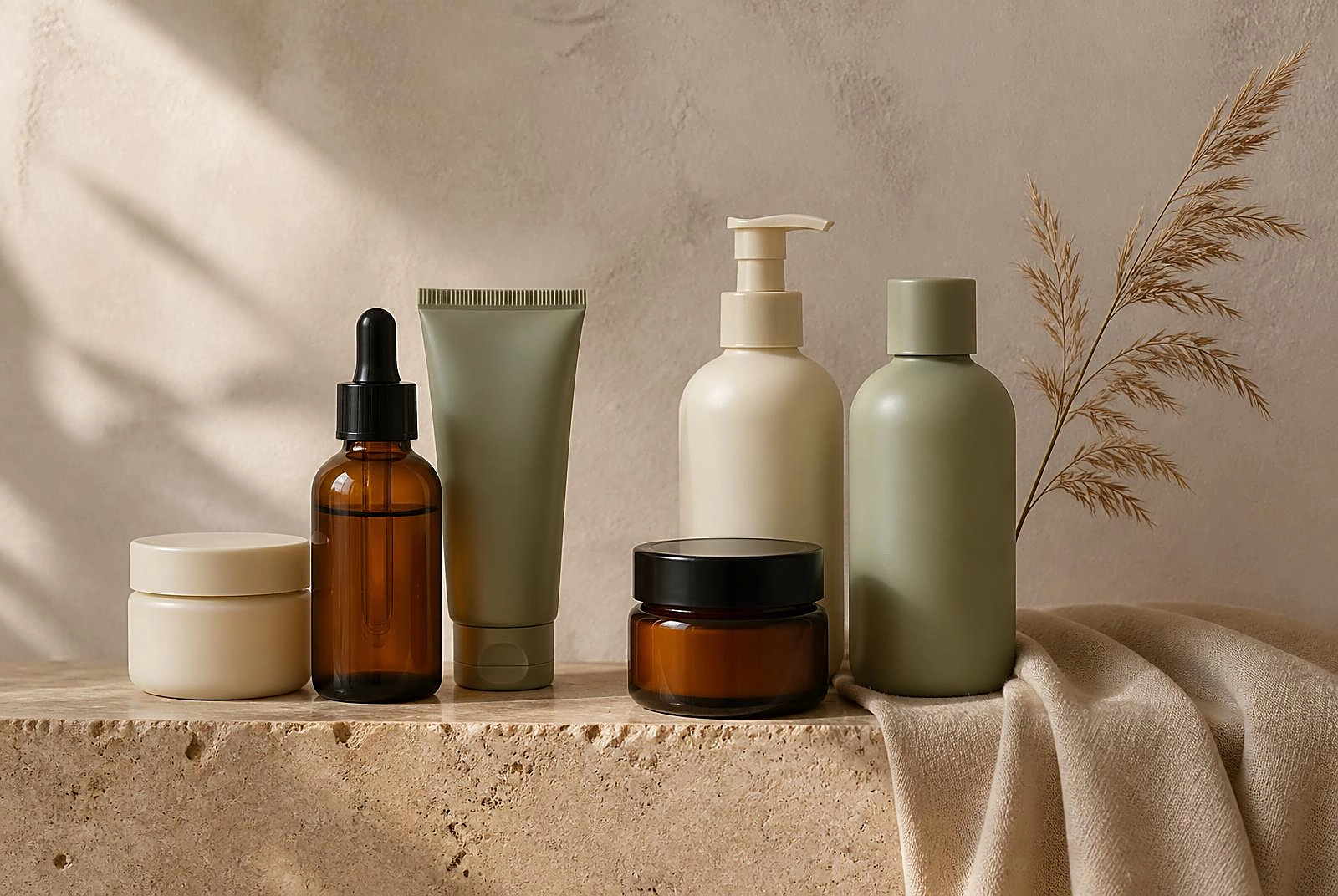
The six that do the work
This is the shape of almost every routine that holds up over a year. The names change, the count rarely does.
| Slot | When | What it is for |
|---|---|---|
| Gentle cleanser | Morning and night | Removes sunscreen, oil and grime without stripping lipids. |
| Moisturizer | Morning and night | Holds water in and gives the barrier the lipids to rebuild with. |
| Sunscreen | Morning | The single step with the clearest long-term effect on tone and texture. |
| One active | Night, most nights | Retinoid, acid or a targeted serum — chosen for one concern, not three. |
- Morning: cleanser, moisturizer, sunscreen.
- Night: cleanser, active, moisturizer.
- That is four products covering six steps, because two of them are used twice.
The extras, and when they earn a place
Nothing on this list is a waste of money in the right context. The mistake is adding them before the core six are consistent, or adding three at once so no single change can be attributed.
| Extra | Add it when |
|---|---|
| Hydrating toner or essence | Your moisturizer alone leaves skin tight within an hour. |
| Second cleanser or oil | You wear heavy sunscreen or makeup and one wash does not remove it. |
| Eye cream | You want a lighter texture near the eyes than your face cream allows. |
| Occlusive balm | Cold or dry air is undoing the moisturizer overnight. |
| Second active | The first has been comfortable for several months and one concern is still unmet. |
| Exfoliating acid | Texture is the concern, and you can commit to once or twice a week only. |
Signs your shelf has too much on it
A crowded routine does not usually announce itself as irritation. More often it looks like a plateau: nothing is obviously wrong and nothing is obviously improving, because no single ingredient is getting a fair, uninterrupted run.
- You own three or more actives and use each of them inconsistently.
- You have no sunscreen, but four things aimed at tone or texture.
- Your routine takes long enough that you skip it when you are tired.
- You cannot say what any one product is for without reading the bottle.
- Something stings occasionally and you are not sure which step causes it.

How to cut back without guessing
Subtracting is harder than adding, because every bottle came with a reason. The workable method is to keep the core six, park everything else for four weeks, and reintroduce one item at a time only if you can name what you expect it to change.
If you would rather not do that by eye, The Ritual Lab does it from a list. You enter what you own, and it returns a keep, move or drop decision for each item with the reasoning attached, a morning and evening order for what survives, and at most one product suggested — usually the sunscreen or moisturizer that was missing all along.
Frequently asked
- Is a ten-step routine bad for your skin?
- Not inherently. Most of the steps in a long routine are hydrating layers with no active conflict, and plenty of people use them comfortably. The risk is not the count, it is stacking several strong actives inside it and not being able to tell which one caused a reaction.
- Do I need a toner?
- No, not as a required step. A hydrating toner is useful if your moisturizer alone leaves skin tight, and a stripping alcohol-based one is worth skipping entirely. It is an optional comfort layer rather than part of the core.
- Can one product replace two?
- Often, yes. A moisturizer with niacinamide, or a tinted sunscreen, genuinely collapses two slots into one. Just count the actives inside it honestly when you are working out how much your skin is being asked to handle.
- What if I have several concerns at once?
- Rank them and treat the loudest one first for three months. Skin generally responds better to one ingredient used consistently than to three used cautiously, and treating them in sequence makes it obvious which one is working.