
8 min read
How to Track Skincare Progress Without Quitting Too Early
This page contains affiliate links. As an Amazon Associate I earn from qualifying purchases.
The short answer
Take weekly photos in the same light, use the ingredient-specific assessment window, and only change one product at a time. Hydration may change sooner; texture, tone, and acne usually need longer and vary by treatment.
Key takeaways
- Most people abandon a working routine around week three, before any active has had time to show results.
- Photographs taken in the same light, at the same angle, once a week are the only reliable way to see slow skin change.
- Use concern- and product-specific checkpoints rather than one timetable for cleansers, acne treatments, and retinoids.
- Changing one product at a time is what makes it possible to know which product caused a change.
The mirror is a poor judge of skincare progress. Day-to-day lighting, sleep, hormones, and stress change how your skin looks more than a single night of retinoid can. That is why most people abandon a working routine around week three: the initial glow has faded, the real results have not arrived, and a new product starts looking more promising than the one already in the cabinet. Tracking progress with photos, dates, and a clear checkpoint schedule removes that guesswork and gives you an objective reason to keep going or an honest signal to stop.
Written by Maria Alejandra, founder and editor · Last updated:
Independently researched and reviewed for accuracy. Read our editorial policy or how we research routines.
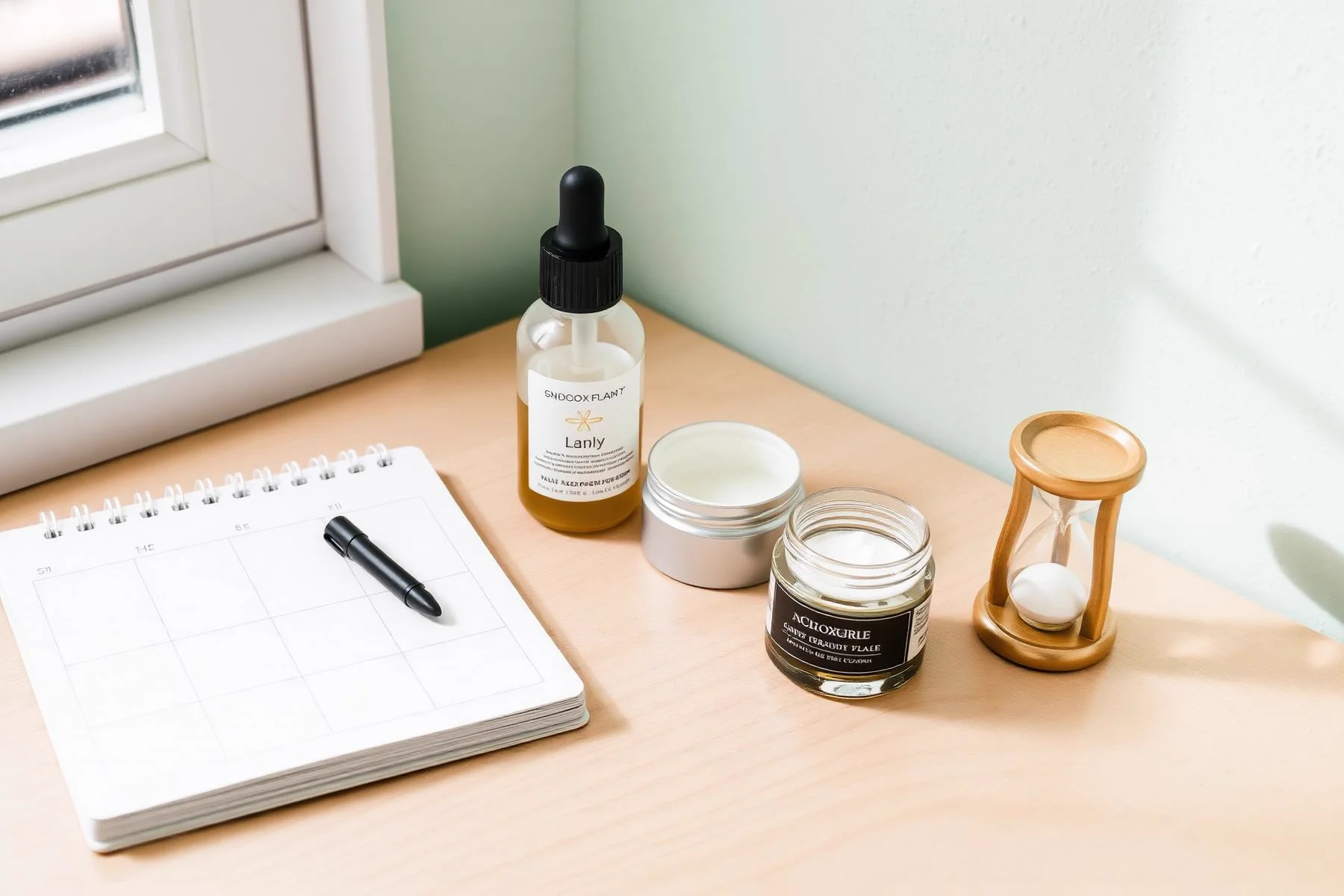
The four checkpoints
Use these checkpoints to separate normal early adjustment from a product that genuinely is not working. The key is to look for trends across several weeks, not daily fluctuations.
| Timeframe | What to check | Normal | Red flag |
|---|---|---|---|
| Week 1–2 | Hydration, comfort, no new irritation | Skin feels softer and less tight. | Burning, swelling, or widespread rash. |
| Week 4–6 | Texture and congestion | Mild purging on retinoids; small surface bumps surfacing faster. | New cysts in areas where you do not usually break out. |
| Week 8–12 | Tone, clarity, and fewer new blemishes | Measurable improvement in texture or fading on older marks. | No change at all after consistent use. |
| Week 12+ | Fine lines, deeper marks, overall evenness | Gradual brightening and smoother texture. | Worsening irritation, persistent redness, or new sensitivity. |
A simple photo protocol
Photos beat memory. Take one front-facing and one side photo every seven days, at the same time of day and in the same spot. Natural daylight from a window is the most honest light source. Turn off bathroom downlights, which exaggerate texture and shadows.
- Use no makeup and the same cleanser beforehand.
- Hold the camera at the same distance and angle each week.
- Compare week 0 to week 4, 8, and 12 — not day to day.
- Store photos in a dedicated album so they are easy to find.
What each active should show by when
Different ingredients work on different timelines. Judging a retinoid at two weeks is like judging a marathon at the first mile marker.
- Hydrators — glycerin, hyaluronic acid, ceramides: comfort within days, visible plumping within one to two weeks.
- Acne actives — benzoyl peroxide, adapalene, azelaic acid: improvement is gradual and the useful assessment window varies by treatment.
- Vitamin C: tone changes are gradual and vary by formulation, pigment depth, sun exposure, and consistency.
- Retinoids: texture and fine-line changes are gradual and vary by formulation, frequency, sun protection, and study endpoint.
When a plateau is normal
Skin reaches a maintenance phase once the active has done its main job. A plateau is not failure. If your acne is controlled, your barrier is calm, and your tone is even, the goal shifts from improvement to consistency. That is the phase where most people over-tweak and reintroduce problems.
The only reason to add a new active at this stage is to address a specific concern that has not been resolved. More products do not produce better skin; the right products used consistently do.
The one-product rule
If you change more than one product at a time, you lose the ability to know what helped or hurt. The one-product rule is simple: introduce one new product, wait at least four weeks, and only then decide whether to keep it, adjust it, or replace it.
- Start with the lowest effective frequency, not the label's maximum.
- Record the start date and the exact concern you are trying to treat.
- If the skin worsens, stop the newest product first and wait two weeks.
- Only add a second active once the first one has been stable for a month.
When to actually quit a product
There is a difference between being impatient and being intolerant. Stop a product and seek appropriate medical advice for persistent burning, swelling, hives, or a continuing rash. For lack of benefit, use the product-specific evidence and label to decide when a fair trial has passed rather than relying on one universal deadline.
Dryness, mild flaking, and a short purge on a retinoid are usually adjustment, not failure. Stop only if those symptoms escalate or do not improve with buffering and frequency reduction.
Frequently asked
- How often should I take progress photos?
- Once a week is enough. Daily photos capture normal fluctuations, not real progress. Compare week 0 to week 4, 8, and 12.
- Can I judge a product after two weeks?
- Only hydration and comfort. Texture, tone, acne, and fine lines need at least one full skin cycle, which is roughly 28 days, and usually two to three cycles for a fair verdict.
- What if my skin gets worse before it gets better?
- A retinoid purge is common and usually peaks around weeks two to four. If breakouts appear in new areas, last longer than six weeks, or come with significant irritation, it is likely a reaction rather than a purge.
- Should I track products in a spreadsheet?
- A simple note with start date, product name, frequency, and the concern you are treating is enough. Photos do the heavy lifting.
- When is it time to add a second active?
- Only after the first active has been stable and tolerated for at least four weeks, and you have a specific, unresolved concern to target.