
9 min read
Can You Use Niacinamide With Vitamin C?
This page contains affiliate links. As an Amazon Associate I earn from qualifying purchases.
The short answer
Yes. Niacinamide and vitamin C are safe and effective together in the same morning routine. Apply the thinner vitamin C serum first on dry skin, then niacinamide, then moisturizer and sunscreen. The old claim that they neutralize each other comes from heated lab conditions, not finished cosmetic formulas.
Key takeaways
- Niacinamide and vitamin C can be used together in the same routine; they do not cancel each other out.
- The flushing claim comes from 1960s experiments using heat and raw ingredients, not from modern finished serums.
- Applying vitamin C first on dry skin, then niacinamide, is the order that suits most people.
- Skin that stings from the pair can split them: vitamin C in the morning, niacinamide at night.
Niacinamide and vitamin C are the two most common brightening ingredients on a bathroom shelf, and the internet spent a decade insisting they must never touch. The claim traces back to mid-century studies that heated pure L-ascorbic acid with pure niacinamide in water and observed a conversion to niacin, which can cause temporary flushing. Finished serums are formulated at low pH, stabilized, and applied at room temperature to skin, so that reaction is not what happens on your face. Multiple modern formulas ship both actives in a single bottle for exactly this reason. What follows is the practical version: the order to apply them, the concentrations that make sense, who should still separate them, and how to tell an irritation reaction from a formula problem.
Written by Maria Alejandra, founder and editor · Last updated:
Independently researched and reviewed for accuracy. Read our editorial policy or how we research routines.
The short answer
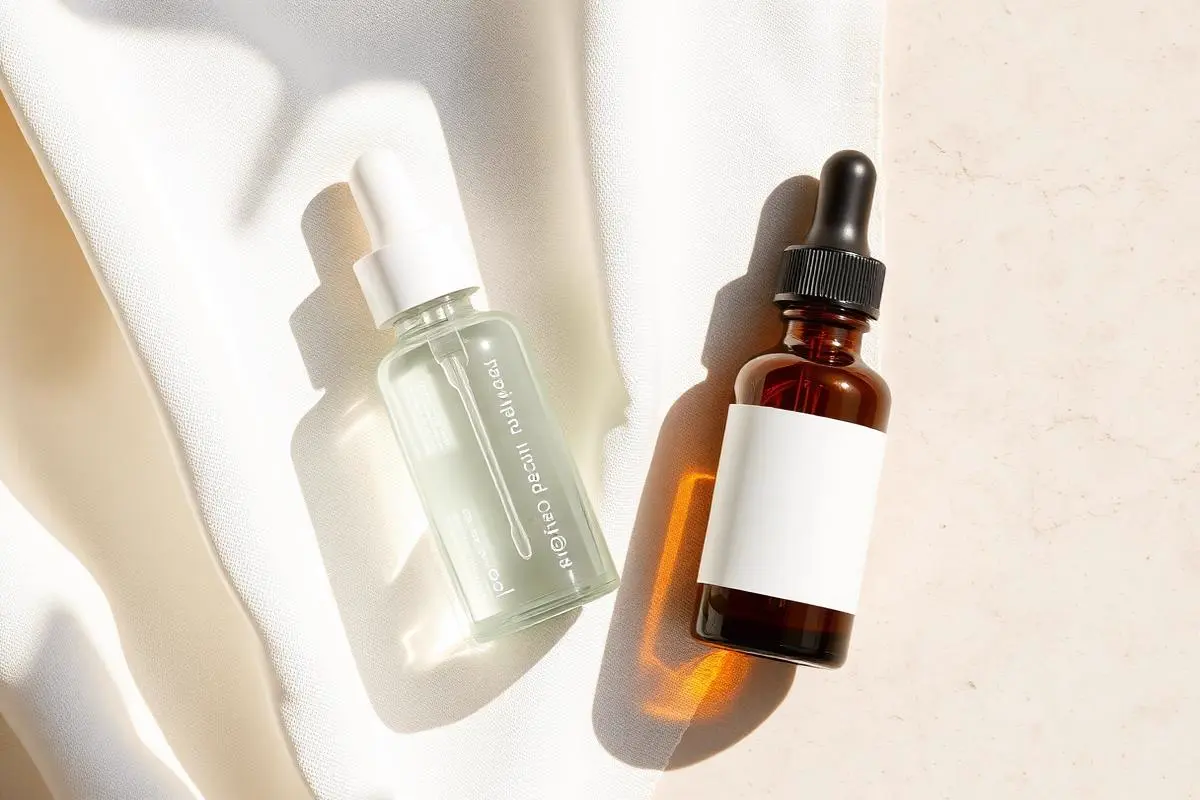
Use them in the same morning routine. Vitamin C first because it is usually thinner and needs direct contact with skin at a low pH; niacinamide second because it is pH-flexible and layers well over anything. Finish with moisturizer and SPF. If your skin is reactive, split them — vitamin C in the morning, niacinamide at night — and you lose nothing except the convenience.
| Schedule | Who it suits | How to do it |
|---|---|---|
| Layered, same morning | Most skin types | Vitamin C on dry skin, wait 60 seconds, niacinamide, moisturizer, SPF. |
| Split AM/PM | Sensitive or reactive skin | Vitamin C in the morning under SPF, niacinamide at night before moisturizer. |
| Single combined serum | Minimalists and beginners | One formula with both actives already balanced — fewer steps, less room for error. |
Where the flushing myth came from
The concern is real chemistry under the wrong conditions. In aqueous solution at high temperature, ascorbic acid and niacinamide can form a niacinamide-ascorbate complex, and niacinamide can hydrolyze to niacin. Niacin is a vasodilator, which is what produces the brief pink flush some people associate with the pairing.
Three things stop that from mattering. Cosmetic serums are not heated. They are buffered and stabilized, often with additional antioxidants. And the exposure on skin is minutes at low volume, not hours in a beaker. If a pairing genuinely flushes your face, the far more likely explanation is a low-pH vitamin C irritating a compromised barrier — not a chemical reaction between the two actives.
What each one actually does
They are worth combining because they work on different parts of the same problems: dullness, uneven tone, and visible pores.
- Vitamin C (L-ascorbic acid) — antioxidant protection against daytime free radical damage, supports collagen synthesis, interrupts pigment formation.
- Niacinamide (vitamin B3) — supports ceramide production and barrier strength, reduces the look of pores and redness, regulates sebum, limits pigment transfer to skin cells.
- Together — vitamin C works upstream on pigment production while niacinamide slows the handoff of pigment to surface cells, and the barrier support makes the vitamin C easier to tolerate.
The correct order to layer them
Thin to thick, and let the low-pH product go first on clean, dry skin.
- Cleanse and dry the skin completely. Damp skin increases penetration and stinging from acidic vitamin C.
- Vitamin C serum — 3 to 5 drops, pressed rather than rubbed in.
- Wait 60 seconds. This is enough; the 'wait 30 minutes' rule is unnecessary for finished formulas.
- Niacinamide serum — 10% or lower is plenty. Higher percentages do not brighten faster, they just irritate more often.
- Moisturizer, then SPF 30 or higher. Vitamin C without sunscreen wastes most of its benefit.
Concentrations that make sense
More is not better with either active. These are the ranges the published research supports and the ones that stay comfortable day after day.
| Active | Range | Notes |
|---|---|---|
| L-ascorbic acid | 10-20% | 15% is the common sweet spot; 20% raises irritation without much added benefit. |
| Vitamin C derivatives | 5-15% | Gentler and more stable; slower results. Good for sensitive skin. |
| Niacinamide | 2-5% | Enough for barrier, tone and oil control. 5% is the well-studied level. |
| Niacinamide (high) | 10% | Fine for oily, resilient skin. A frequent cause of stinging in sensitive skin. |
If your skin stings when you use both
Stinging is a barrier signal, not proof of a reaction between the ingredients. Work through this list in order before you give up on the pairing.
- Drop the niacinamide percentage from 10% to 5% or lower.
- Apply to fully dry skin instead of damp.
- Buffer with moisturizer first, then the actives on top.
- Split them across the day — vitamin C in the morning, niacinamide at night.
- Check what else is in the routine. Retinoids, acids and fragrance are far more likely culprits.
- Pause both for a week and rebuild the barrier with a plain ceramide moisturizer before reintroducing one active at a time.
What to pair them with, and what to avoid
Niacinamide is one of the easiest actives to combine with anything. Vitamin C is the fussier of the two.
| Combination | Verdict | How to use it |
|---|---|---|
| Niacinamide + retinoid | Safe together | Niacinamide first at night; it measurably reduces retinoid irritation. |
| Niacinamide + hyaluronic acid | Safe together | Hyaluronic acid on damp skin, niacinamide on top. |
| Vitamin C + sunscreen | Recommended | Vitamin C is an antioxidant layer under SPF, never a replacement for it. |
| Vitamin C + AHA/BHA | Use with care | Same morning only for resilient skin; sensitive skin should split them across days. |
| Vitamin C + benzoyl peroxide | Avoid same routine | Benzoyl peroxide oxidizes ascorbic acid. Use them at opposite ends of the day. |
| Niacinamide + everything else | Safe | There is no common active niacinamide needs to be kept away from. |
How long before you see anything
Both are slow, cumulative ingredients. Judge them on months, not mornings.
- Weeks 1-2: skin feels smoother and better hydrated. No visible tone change yet.
- Weeks 4-6: oiliness and redness typically settle first, from the niacinamide.
- Weeks 8-12: brightness and post-acne marks begin to fade, mostly from the vitamin C plus daily SPF.
- Month 4 onward: tone evenness holds only if sunscreen is genuinely daily. Without it, pigment returns faster than either active can clear it.
Frequently asked
- Can you use niacinamide and vitamin C together?
- Yes. Applying them in the same routine is safe and effective. Apply vitamin C first on dry skin, then niacinamide, then moisturizer and sunscreen.
- Do niacinamide and vitamin C cancel each other out?
- No. That claim comes from experiments heating pure ingredients in water. Finished, stabilized cosmetic serums applied to skin do not behave that way.
- Which goes first, niacinamide or vitamin C?
- Vitamin C first. It is usually the thinner, lower-pH formula and works best in direct contact with dry skin. Niacinamide layers comfortably on top.
- Do I need to wait between niacinamide and vitamin C?
- About 60 seconds, just long enough for the first layer to absorb. The 30-minute waiting rule is unnecessary for modern formulas.
- Why does my skin flush when I use both?
- Almost always barrier irritation from a low-pH vitamin C or a high-percentage niacinamide, not a reaction between them. Lower the niacinamide to 5% and apply to fully dry skin.
- Can I use a serum that contains both?
- Yes, and it is the simplest option. Combined formulas are balanced by the manufacturer and remove the layering order question entirely.